What a Finance or Ops Tear-Down Actually Destroys Before the First AI Agent Is Assigned a Role
Tear-downs strip out approvals, handoffs, and workarounds that sink agents.
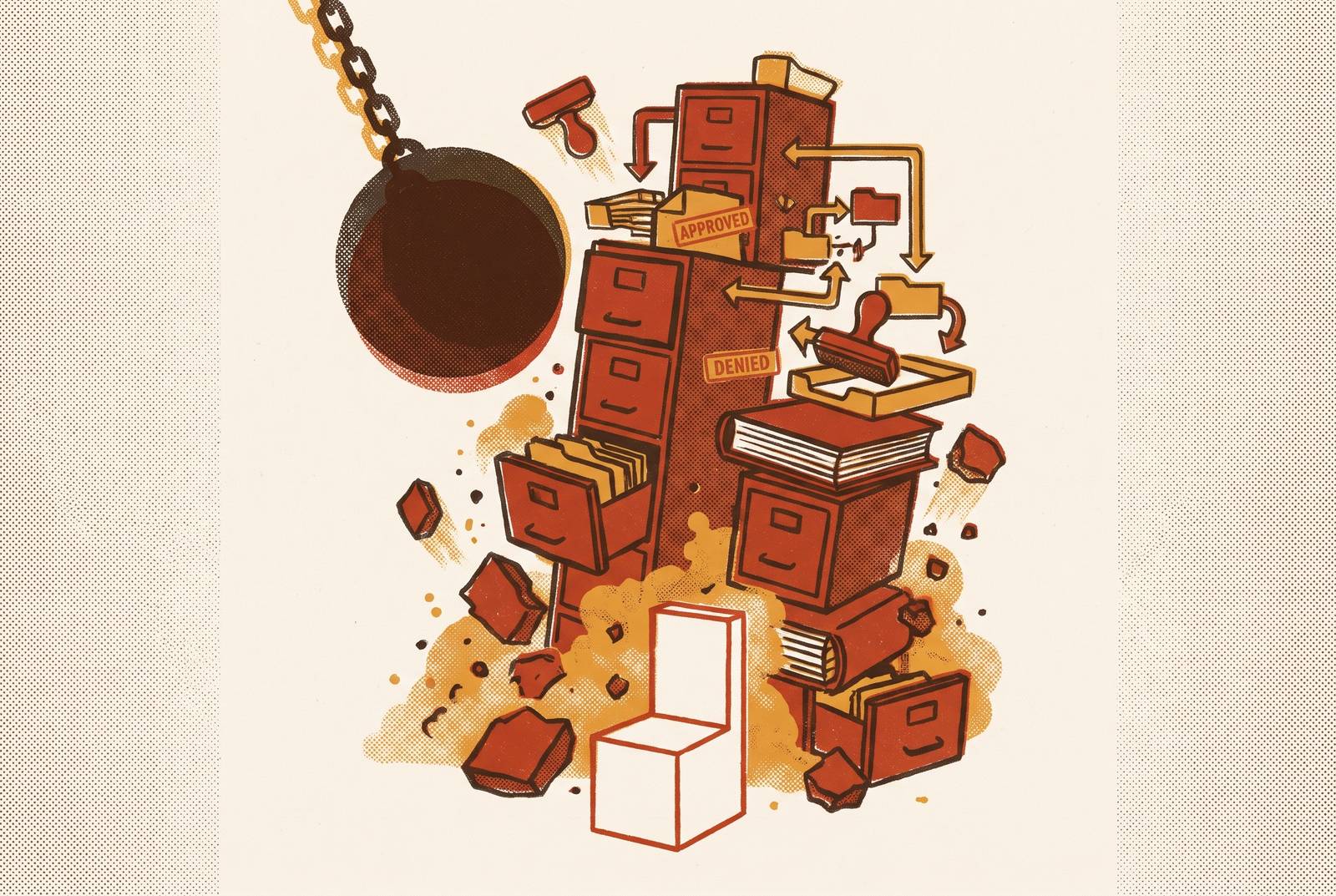
Rebuilding finance or ops workflows with AI agents starts by removing the structures that would make those agents fail. A tear-down eliminates redundant approvals, unowned handoffs, invisible workarounds, and ungoverned metric definitions before assigning agent roles. The transformation is this redesign of how work runs.
Why finance and ops processes fail AI agents before the agents do anything wrong
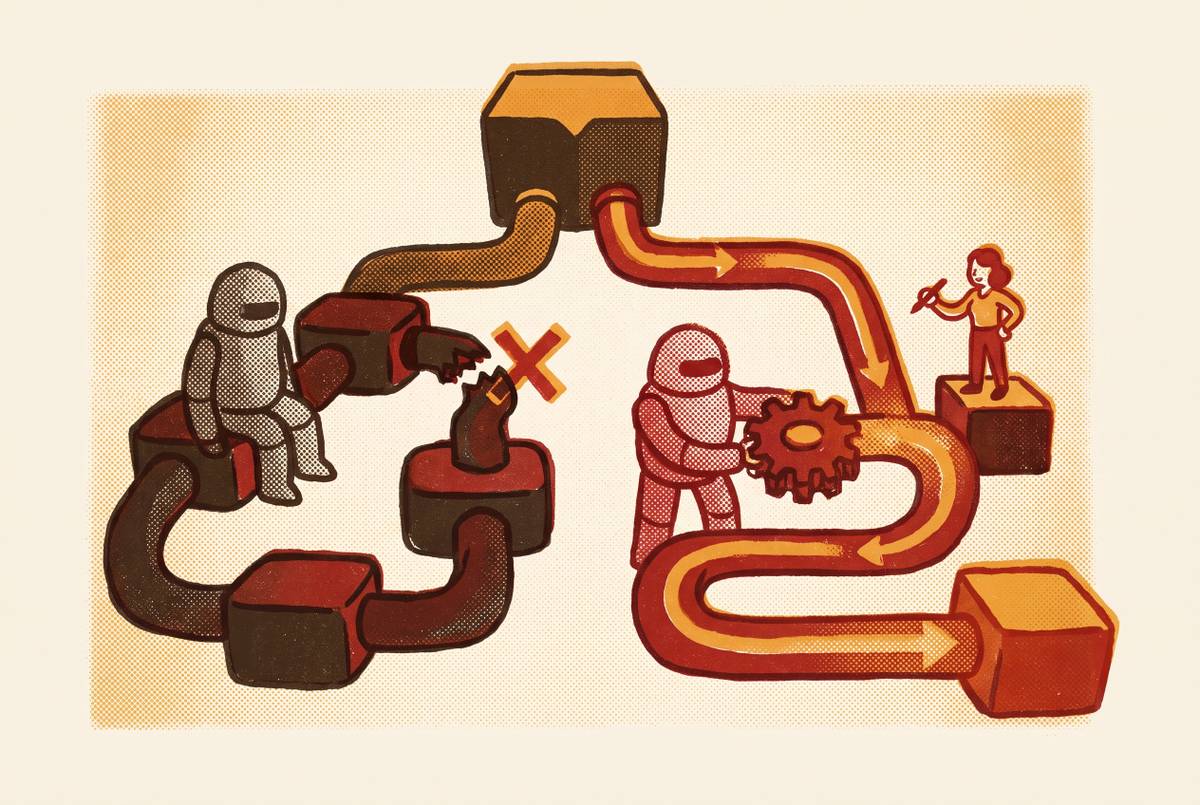
An agent completes its task in seconds, then passes its output into an approval chain that takes days. At the next handoff, the receiving team expects a correction that an experienced employee used to make without documenting it. The agent has followed the declared process. Yet the work cannot move cleanly because that process depends on people compensating for its defects. The failure begins in the structure, before the agent makes a mistake.
BCG's research finds that 70% of AI success comes from people, processes, and change management, making adoption as important as the technology. Scott Rodgers at Deloitte names more of what is missing, including machine-readable definitions, explicit policy constraints, and structured data flows. These define the conditions under which an autonomous system can perform its assigned role without relying on unwritten human intervention.
BCG's 2026 finance function report distinguishes automation, which executes predefined rules, from autonomy, which interprets context, handles exceptions, and continuously improves. A workflow built around human error-correction does not become suitable for autonomy simply because its individual tasks can be automated. The real transformation therefore happens before the agent arrives, when the organization makes responsibilities, constraints, and information flows explicit enough to support a different way of operating.
What the tear-down is actually auditing when it starts with how work is done today
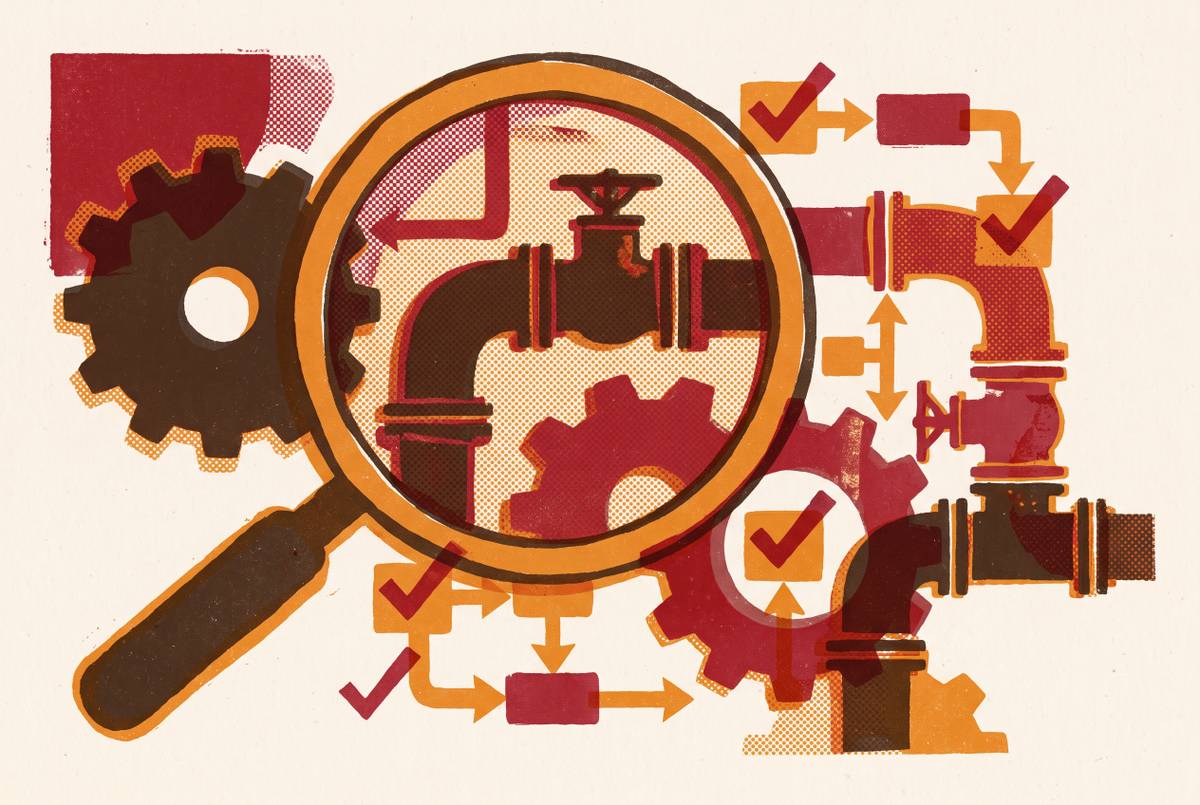
Process documentation describes the work an organization thinks it does. A tear-down looks at the work people actually do, including the corrections, conversations, and detours that keep the written sequence working. The gap is the diagnostic target. Reviewing the formal workflow alone misses precisely the behavior that an agent would not know to reproduce.
The method is bottom-up, with direct observation of operators, structured interviews role by role, and system telemetry where it exists. Each contributes something different to the baseline. Observation exposes steps that have become too familiar to mention, while interviews establish why employees perform them. Telemetry shows what happens in the system around those steps, so the review has more to go on than the declared process.
The review produces an account of how tools, data flows, decisions, and informal interventions combine to produce an outcome. That account distinguishes a necessary control from a repeated check, and a legitimate exception from a workaround for a broken route. It also exposes where responsibility ends before the next role can reliably begin.
Across that account, the targets become specific. They include approvals that re-verify earlier work, transitions with no accountable owner, permanent workarounds whose purpose is undocumented, and metrics with competing definitions. Those are structural conditions to remove before scoping agent roles.
Redundant approvals: when every layer re-checks the layer before it
A four-stage approval process can look like strong governance while doing little more than reassuring people again and again. If each stage checks what the preceding stage already checked, the extra layers do not address distinct classes of error. They institutionalize distrust of upstream work. Assigning agents to those stages may shorten each review, but it leaves the approval architecture intact.
The tear-down tests each stage against a precise criterion, namely the class of error it catches that the prior stage does not. Where there is no distinct answer, the stage is a candidate for elimination. Genuine controls survive that test because they have a defined purpose. Checking the same work again does not catch a new class of error just because people have always done it.
The finance report describes a historical tradeoff in which tighter control required extra bureaucracy. Its AI-first alternative replaces repeated review afterward with controls embedded at the transaction layer. The distinction is between control and duplication. Removing a redundant approval is not an argument for leaving the transaction ungoverned.
That change is political before it is technical. Approval rights represent authority and protection, so removing them requires a mandate from above rather than a recommendation from a process team alone. BCG's 2026 asset management report places reducing layers, decision paths, and redundant review loops within operating-model redesign. The technical work can implement the resulting structure, but it cannot substitute for the organizational decision to remove unnecessary authority from the workflow.
Unowned handoffs: the coordination gaps that agents cannot bridge by working harder
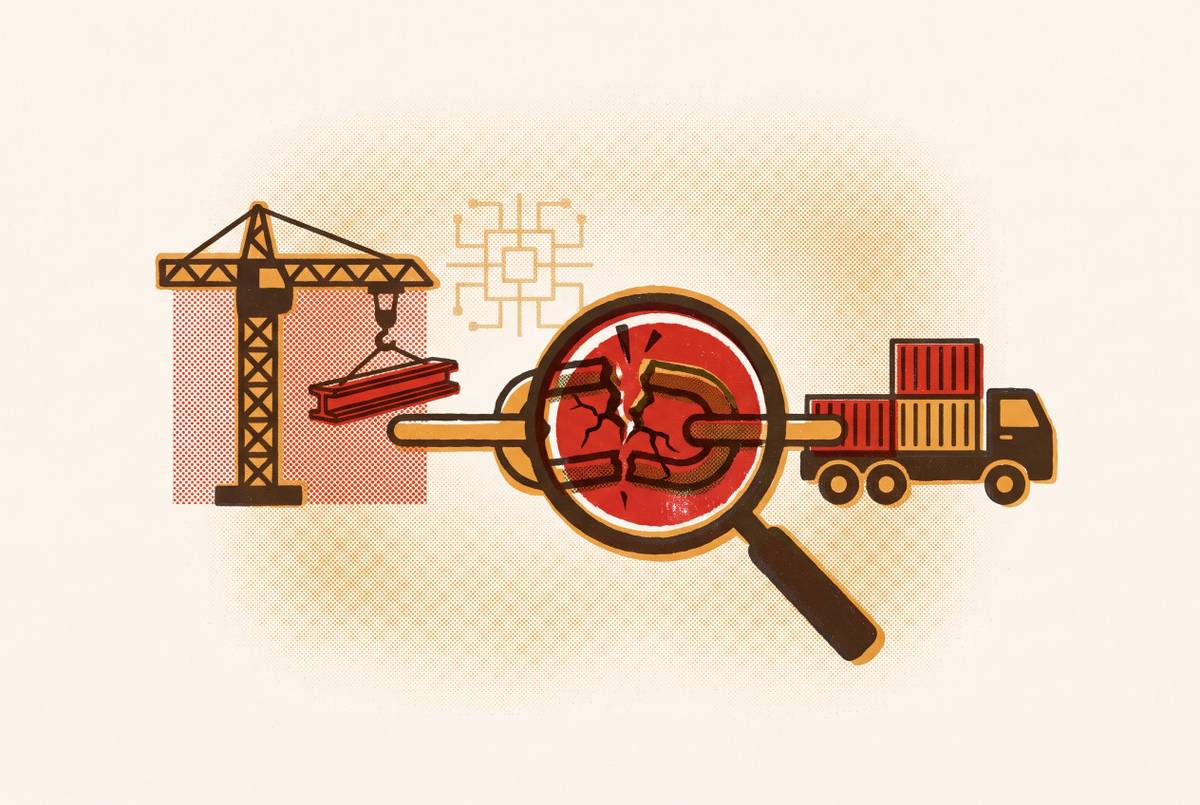
Retail replenishment makes the next structural problem visible through its sequential chain of forecast, allocation, procurement, and execution. A better forecasting model can improve the first step without repairing what is lost or distorted when its output reaches allocation. An agent working harder on one leg of the sequence cannot take responsibility for a transition that the organization has never assigned.
Sequence itself is not the defining defect. An unowned handoff is a transition where no role is accountable for what arrives at the next step. Information may be incomplete, stale, or inconsistently formatted, while the downstream employee quietly compensates. The apparent continuity of the process therefore rests on whoever notices the problem first.
That distinction changes what gets redesigned. The tear-down assigns ownership and format to every field entering or leaving the process before an agent's responsibility is scoped. Otherwise, the role is defined without a reliable account of its inputs or the obligations attached to its output. Information continuity belongs in the architecture.
EdgeVerve's N. Shashidar describes a live CFO environment in which seven agents operated through a workflow that had been decomposed into tasks and reassigned. The example's significance is the reassignment of work, rather than the insertion of agents into an unchanged relay. Ownership must cover the transitions as well as the tasks.
Implicit tribal logic: the workarounds that became the process without anyone writing them down
The people who bridge unowned handoffs often know what keeps the rest of the operation running. They know which approval moves only after a direct call, which exception is treated as a standard transaction because the exception route is broken, and which field needs correction before the next step. This is organizational competence.
An agent assigned to the documented workflow encounters the conditions employees have learned to manage, but not the knowledge that makes those conditions manageable. Removing the human contribution can therefore expose a defect that was already present. The agent has not created the gap.
Reading the documentation alone cannot show how the process depends on this work because no one has written it down. Direct observation and structured interviews make the compensating work visible and establish why it occurs. The distinction is essential to the tear-down. Without it, a redesign can strip out the judgment that keeps work moving while leaving in place the flaw that made people need that judgment.
Once a workaround is visible, there are two legitimate responses. If it represents sound handling of a real condition, the rebuilt process formalizes and encodes it. If it exists only because an underlying part of the workflow is broken, the tear-down removes that condition where possible. The target is not employees' accumulated knowledge, but the need for an operation to depend on knowledge it has never made explicit.
Ungoverned metric definitions: when the agent computes its own answer because no one defined the official one
Even a process with clear ownership and explicit rules can produce the wrong operational answer when its terms remain ambiguous. “On-hand inventory” may have multiple plausible definitions depending on the system, team, or date convention being used. An agent can select one and calculate it correctly. The resulting number can still differ from the number the operation treats as authoritative.
This failure is harder to recognize than a system error because the answer looks coherent. Humans often resolve the ambiguity through context and judgment, knowing which definition a particular request implies. An agent operating without governed definitions instead infers an interpretation from the data available to it. Computational accuracy cannot settle a disagreement about what was supposed to be computed.
The tear-down exposes that disagreement by asking multiple teams to define the same metric independently. Different answers reveal a governance problem before it appears as an agent discrepancy. Each data element needs a system of record, an owner responsible for accuracy, and a defined format as it enters and leaves each process step.
The finance report places designing the data fabric within the CFO's new mandate. Centralized data models and integrated systems provide the foundation for a single source of truth, but the operational decision remains explicit. The organization must decide which meaning governs the work before an agent is expected to act on it.
How to rebuild a department workflow with AI agents after the tear-down
The rebuilt workflow starts with the tasks and who is responsible for them, rather than with the job boundaries and approval chains already in place. Deloitte and EdgeVerve describe agent-first design as decomposing the workflow, assigning tasks to agents or humans according to what each does best, and defining protocols between their touchpoints. The architecture changes the division of work. Humans set intervention thresholds and deal with genuine exceptions, while agents do the work, watch it, and flag issues.
Once it is clear which steps depend on others, the process can use parallel execution where it fits. Continuous monitoring replaces reliance on routine human rechecking, while policy-embedded controls operate at the transaction layer. These changes depend on the preceding decisions about ownership and definitions. An exception cannot be escalated meaningfully if its destination or governing rule remains unclear.
The finance report illustrates this architecture through autonomously drafted journal entries, continuous reconciliation with exceptions flagged, and planning and forecasting whose monthly cycle is replaced by dynamic updates. Full autonomy is not the default for every task. The three modes, which are suggest-only, propose-and-approve, and execute-with-rollback, should match each task's risk level.
The CFO's role shifts toward designing the data fabric and setting the rules under which agents work. A live first process within weeks is the benchmark for a well-executed rebuild. If design stretches out after the tear-down, it has become a new bottleneck rather than evidence that the original structural defects required preservation.
Why doing this work before the agent arrives is the actual transformation, not the preparation for it
The strongest objection is that deploying quickly produces real-world signal sooner than an audit. A pilot may move fast and appear to offer useful evidence without extensive redesign. When the process contains hidden corrections, disputed definitions, and unowned transitions, its failures cannot be cleanly distinguished from failures of the model. Fixes can accumulate around the symptoms while the structure remains untouched.
For operations leaders, the practical starting point is therefore a specific, painful process rather than a platform strategy or broad transformation roadmap. Operators show how that process runs today and where it hurts. This keeps the work granular enough to expose how a functioning operation departs from its written sequence.
The asset management report states that “an order-of-magnitude AI advantage requires structural redesign”. At process level, success is visible in the conditions that no longer exist. Redundant approvals are gone, handoffs have owners, useful tribal logic is documented, and definitions are governed. Those are changes to how the organization operates, regardless of which technology subsequently performs the work.
The agent's arrival operationalizes those decisions. The tear-down is the transformation.