The Standard a Process Assessment Must Clear Before AI Scope Is Written in Freight and Construction
Three independent gates decide whether a process is stable enough to automate.
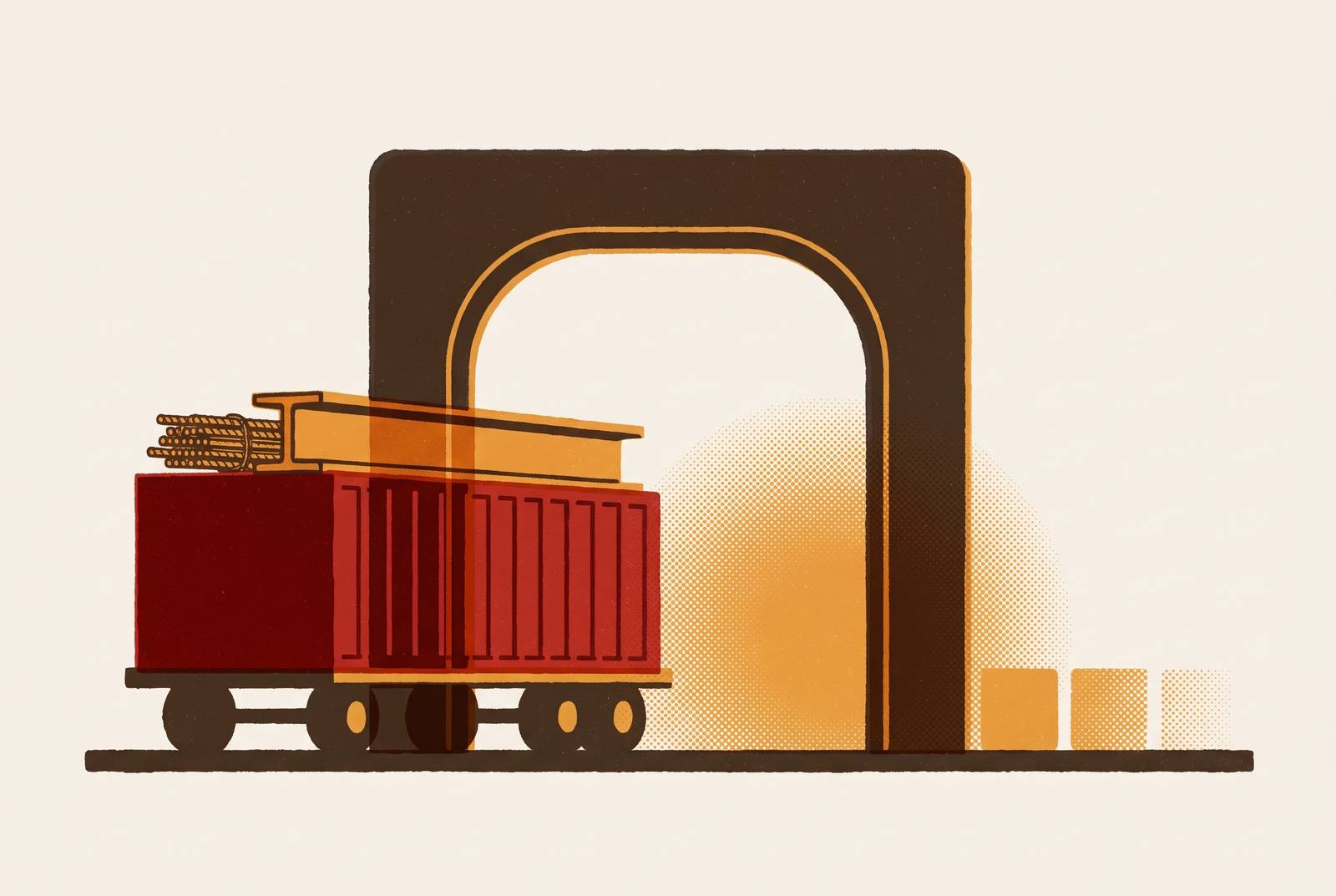
Before AI scope is written in freight or construction, a process audit must prove that the workflow reflects actual execution, its data matches field evidence, and agent actions can be audited and reversed. Each of these gates must be passed independently. The assessment must show whether a specific process is stable enough to speed up, as well as where automation looks attractive.
Why AI scope written against an unvalidated process fails in freight and construction
A field change discussed in a WhatsApp thread but absent from the formal plan exposes the failure mechanism. If an agent optimizes building systems work against the abandoned plan, its outputs may look correct while directing work that requires rework. The missing link is the actual field decision. Better optimization cannot recover a change the agent never receives, and a demonstration that works against the recorded plan does not prove that the plan can be carried out.
Freight has the same problem when intake data is inconsistent. An agent acting on those records can automate the inconsistency at scale, while dispatcher workarounds remain outside its view. This is a scope design failure. The organization has specified what AI should do before establishing what the underlying process actually does. The assessment exists to prevent that sequence by requiring evidence of a workable process before anyone commits to automating it.
Why most assessments stop short of the evidentiary bar
Most assessments identify where a process hurts without establishing whether it is structurally sound enough to accelerate. Pain is a useful starting point, but it is not proof of readiness. Stakeholder pressure rewards finding opportunities and moving toward scope. As a result, assessment becomes a use-case discovery exercise. That is an organizational category error.
The resulting pilot pattern is predictable. A team automates a painful step, demonstrates success in isolation, and then finds that scaling stalls because the surrounding process cannot be replicated consistently. In construction, RFI procedures may vary by project manager, while submittal routing depends on who is available that day. A pilot can work within one project manager’s practices without establishing a pattern that another project can follow. The technology demonstration leaves that difference unexplained.
In freight, detention can lead to a similar mistake. A team may scope an alert system before checking whether detention data is captured in the same way across carriers, terminals, and load types. Alerts then fire on incomplete signals and erode dispatcher trust.
The first gate: how do you find out which workflows are broken before rolling out AI?
The first gate requires a documented account of the workflow as it actually runs. Declared plans are not necessarily field plans. In freight, the gap often lies between TMS records and dispatcher actions, including verbal handoffs, workarounds, and exception handling that never enter the system. An agent working from structured records alone cannot follow those unrecorded steps. A process map that excludes them describes a different operation.
The practical test is a step-by-step walkthrough of what happens today and where the process hurts. The team must show actual handoffs and exceptions. Missing steps stop scope from moving forward. When a walkthrough reveals work that exists nowhere in writing, the documentation gap must close before AI requirements are written.
FedEx’s predictive maintenance system illustrates the relevant structural condition. Sensor data from sortation equipment is captured continuously and consistently, making the workflow instrumentable before AI is introduced. The important distinction is the process foundation. An assessment must establish an equally clear account of execution for the process under review, including where formal procedure and actual work diverge.
The second gate: whether the data the process generates is reliable enough for an agent to act on
A documented workflow can still generate unusable evidence. Its records may be fragmented, stale, or in conflict even when people follow a consistent procedure. The assessment must therefore run a source inventory, freshness assessment, conflict mapping, permission model review, retrieval quality test, and ground-truth accuracy spot check, in that order. Each step addresses a different reason the agent might act on the wrong representation of the work. Procedure alone cannot clear this gate.
In construction, ground truth is what is physically installed and supported by field evidence, including photos, timestamps, and location data. Declared completion is not equivalent to evidenced completion. The assessment must check how well the status field matches conditions on site. In freight, documents, schedules, and TMS records can support plan optimization without showing whether the plan can be carried out under current field conditions. Freshness and consistency are therefore conditions of sound scope.
Energization readiness makes the distinction concrete in construction. Procurement and scheduling AI can optimize a sequence without evidence of physical power availability, transmission infrastructure, or confirmed commissioning timelines. The sequence may still be one that cannot be completed. The constraint is invisible because a critical process variable never entered the data layer the agent reads. Before scope proceeds, ground-truth spot checks must show that declared status matches evidenced status reliably enough to avoid a steady stream of consequential errors.
The third gate: whether governance structures exist to make agent action auditable and reversible
Reliable records do not establish permission to act. Even when a process is documented and its data is sound, it is too risky to run without defined authority boundaries, an audit trail, and a clear interrupt path. These controls must be in place before scope is written. Systems entering production without classification, or third-party tools procured without review, leave the organization uncertain about what AI is operating at all. That uncertainty prevents a credible account of who controls its decisions.
In construction, the operational risk is an agent using stale field data without a superintendent being able to correct or override its recommendation before it affects scheduling and procurement. In freight, exception handling may happen without a dispatcher reviewing it. If an agent books or re-routes without a traceable decision log, the organization cannot reconstruct what it saw, decided, or relied on when a load fails. Authority without traceability makes recovery harder precisely when the operation needs a clear explanation.
The governance test must reach implementation questions. Can the agent perform the work under field conditions, and which systems, records, and decisions can it access or change? Can existing infrastructure enforce those boundaries and interrupt the agent when it encounters a condition outside its design? An assessment that stops at pilot results has not established whether the proposed action can be controlled or reversed.
What the three gates together require the assessment to produce
If the workflow description is wrong, testing its records cannot meaningfully establish readiness for the work that actually happens. If the data is unreliable, governance cannot make the proposed action dependable merely by logging or interrupting it. Each failure stops the process from advancing. Strong evidence at a later gate does not compensate for an unresolved earlier one.
The practical consequence is a different standard of evidence. The assessment must produce a verified map of actual execution, a data-readiness report containing ground-truth spot-check results, and a governance feasibility determination. That determination must establish whether the organization can enforce authority boundaries and maintain an audit trail for the proposed agent in its operating environment. A use-case shortlist cannot take the place of these findings. Neither can a pain-point inventory, however accurately it describes the cost of the current process.
To make that evidence achievable, the assessment should begin with one specific, painful process rather than a platform strategy or broad transformation roadmap. The strongest initial target is high-volume, structurally repetitive, and already generating data, with gaps that can close within weeks. The work must remain field-grounded. A live walkthrough must establish what happens at each handoff, where the data goes, and who can override a decision and how. A questionnaire or document review alone cannot show that this is how the work happens.
Where the standard is hardest to clear in construction and freight, and why that matters for scope
In construction, the workflow-reality gate is usually the hardest to clear. Pre-construction BIM models and project schedules show what was designed, rather than what is now in the field, so the formal plan cannot prove that the work has been done. The Suffolk/MIT argument holds that AI brings worthwhile gains when capabilities across multiple areas are connected. That increases the burden of documentation. Even a bounded process must account for the processes feeding it if a multi-step agent depends on their outputs.
In freight, the data-readiness gate is usually the hardest to clear. Records sit across carriers, terminals, brokers, and shipper systems that were not designed to interoperate. Freshness assessment, conflict mapping, and ground-truth spot checks cost more when data lives in five systems that are updated at different rates. A documented handoff does not resolve those differences. Scope must stay within what the operation can keep current and consistent in its evidence, since connecting systems does not make their records agree.
Judd Fuoto of Southland Industries has argued that construction AI is still too early in its training to fulfill the big promises made by the tech sector. The objection deserves a direct answer. Field complexity can exceed what a pre-deployment assessment can fully map, and clearing these gates does not establish that AI can handle every condition it may encounter. The standard makes a narrower claim, namely that a specific process can be shown to be stable enough to accelerate within defined boundaries. The response to unverified complexity is narrower scope under the same test.
That limit also applies to what an agent learns from operational records. Where those records omit field decisions or preserve inconsistent intake, they cannot provide a complete account of execution simply because they are available for training. The assessment must find that gap before the proposed automation is built on the assumption that the records are complete.
What clearing the bar makes possible — and what it rules out
A process that clears the gates provides a defensible basis for writing AI scope. The evidence establishes what work the agent will encounter, whether its inputs reflect actual conditions, and whether the organization can control its actions. That supports a narrow first deployment. The first AI-first process should reach live operation in weeks because its unresolved process questions have already been addressed. Months of deployment work after clearance are a signal to question the approach rather than automatically interpret the delay as caution.
The standard also rejects several attractive but unsupported commitments. It rules out platform- or program-level scope before any individual process has cleared the gates, and pilots that prove the technology works without proving that the process can scale. In the verification-oriented model, evidence is captured continuously, AI structures it, and the system compares field signals with planned work. Teams can then focus their judgment on deviations, risks, and decisions rather than treat generated outputs as proof of reality.
Treat the process audit as a gate that must be cleared before AI scope is written and deployment advances. If the assessment cannot back the proposed action with evidence from the work and controls that can be enforced, narrow the scope or close the gap before moving forward.