Why the Absence of a Tech Strategy Is an Operational Advantage in Extractive Industries
Skipping process redesign lets AI accelerate existing failures.

AI operations transformation in asset-heavy industries should begin with one painful process. The absence of a declared tech strategy can be an operational advantage because it leaves organizations free to examine how work actually runs before choosing a tool. That advantage depends on using the freedom to redesign execution.
How tech-strategy-first deployment skips the step that determines whether AI creates value or compounds dysfunction
Factories that plugged electric motors into steam-era layouts saw no productivity gain. The gains came when they redesigned workflows around the new capability. The workflow was the constraint. That distinction provides the useful historical parallel for AI deployment.
AI creates a similar two-stage opportunity. Its first-order effect is automation, making existing tasks faster and cheaper. Its second-order effect is redesign, changing how work is structured once systems can identify patterns and adapt. Tech-strategy-first deployment typically concentrates on the first stage, placing tools inside workflows whose effectiveness has not been examined. Faster reporting or data summarization may improve an individual task without correcting the process that produces the information or acts on it.
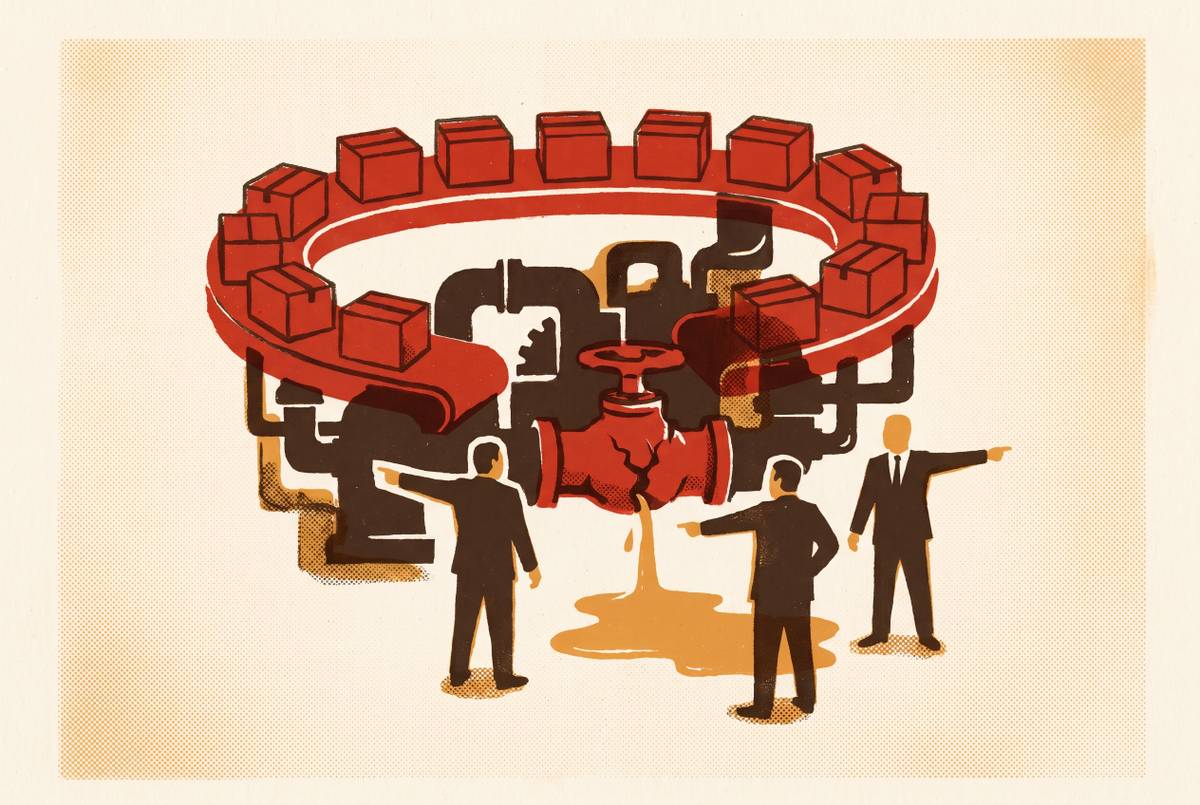
The failure is therefore one of sequence. When tool selection precedes process examination, the existing workflow becomes the assumed foundation. An agent layered onto a broken process can accelerate its failures. Capability creates operational value only when the work it serves has been understood and, where necessary, changed.
Why extractive industries are where this sequencing failure is most consequential
In extractive, construction, and mission-critical industrial settings, what can get done depends on physical assets and on how different kinds of work rely on each other. A process failure cannot simply be patched mid-flight like a software workflow. Materials, equipment, schedules, and labor must converge in practice. A declared relationship between them is insufficient when a missing input prevents the next activity from proceeding.
The Suffolk/MIT white paper Construction in the Age of AI describes decades of stagnant construction productivity, with industry fragmentation, limited technology investment, and limited workflow discipline among the contributing factors. Its six value-lever domains span design automation, offsite manufacturing, permitting, scheduling, skilled labor and subcontracting, and supply chain and procurement. These are connected parts of delivery. The paper estimates that gains build on each other when several domains change together, but a copilot added by one team leaves the surrounding work unchanged.
A facility that is almost right on redundancy is not almost functional if it retains a single point of failure. Such weaknesses are operational, even when they become visible only during commissioning or after the facility is running. Their late discovery shows that execution has failed to produce the functioning system described in the plan. In this setting, understanding the process before accelerating it is a prerequisite for reliable delivery.
What organizations without a declared tech strategy are forced to do instead
An organization without an installed, defended technology stack has no declared workflow architecture to protect. Where does the work actually hurt, and why? The absence of a predetermined technology answer makes that question harder to bypass. It creates pressure to describe the problem in terms of execution.
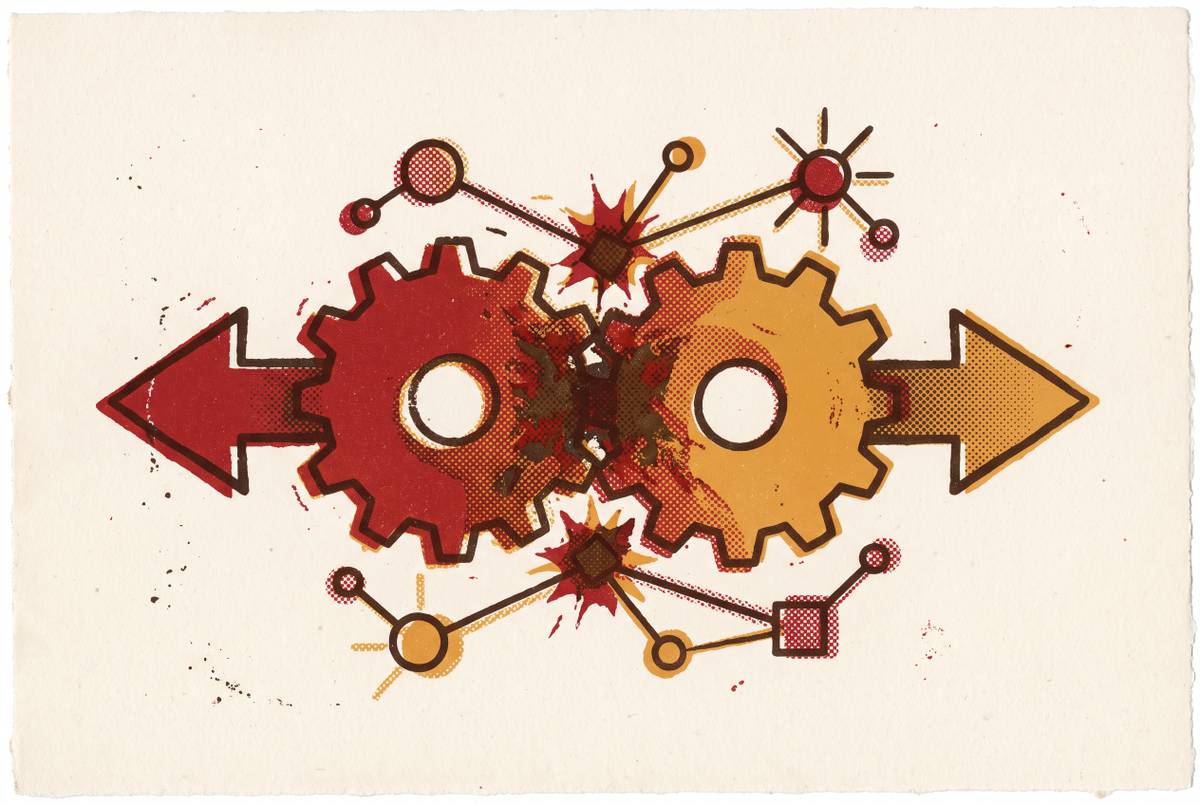
This is structural freedom. A declared strategy brings switching costs, ties to vendors, and money already invested that can make people less willing to look honestly at whether the process works. Those commitments give people reasons to defend the current arrangement. Without that defensive posture, an organization can investigate a workflow without first justifying what the investigation might imply for its technology choices. The process can be judged on its own performance.
An approval may exist in the workflow while functioning only as a formality. A reconciliation may take place on schedule without anyone looking into differences, while users work offline to bypass system controls. Regulatory and operational audits expose this distinction when organizations can produce policies but struggle to show consistent execution. Another rule or system may not supply what is missing.
Pattern analysis makes the distinction more visible. Rather than relying only on sampled transactions, it examines where exceptions recur, which users or business units generate disproportionate overrides, and where approvals are unusually fast or consistently escalated. These patterns reveal the distribution of failures across the process. An approval viewed on its own may look compliant, while the wider pattern casts doubt on whether the review does what it should. Without a strategy to defend, the organization is better positioned to treat that contradiction as a reason to redesign work.
Where the gap between declared process and actual execution is widest in these industries
The gap concentrates in procurement, coordination handoffs, and commissioning readiness. Procurement becomes a structural chokepoint when teams lack real-time tracking of materials and their relationship to planned work. They cannot reliably tell whether inputs will arrive when needed, whether they need substitutions, or how delays will affect the work that comes next. The consequences include excess inventory, expediting costs, and unplanned site workarounds.
Plan documents may say that materials, equipment, and schedule data have been integrated without showing that they are linked in the work itself. The gap may go unseen until energization reaches the critical path. At that point, readiness depends on the actual relationship between inputs. Commissioning cannot substitute a declared state for a physical one.
Deloitte's AI in Manufacturing 2026 survey shows that adoption is strongest where process signals are rich, outcomes are measurable, and operational ownership is clear. Just 49% of manufacturing organizations report AI adoption in Logistics or Supply Chain, the lowest of the tracked domains. The ownership distinction is central to interpreting that result. Where responsibility is contested or workflows are undeclared, a tool lacks a clear operational foundation. Data availability alone does not establish who is responsible for the process that produces and uses it.
The Suffolk/MIT paper's retrospective model of a large San Francisco multifamily project reinforces the importance of connected upstream information. Applied across all six domains, the model estimates compounding gains from supply chain and procurement, scheduling, and labor coordination when process data is clean and connected. The savings are based on retrospective modeling alone.
Outdated topography, incomplete as-builts, and unverified utility conditions push risk into the schedule even when planning documents appear coherent. These are gaps in the evidence on which execution depends. Mapping actual work exposes the contradiction between what the plan assumes and what the field supports. Defending an installed stack does not resolve that contradiction.
Why AI deployed without prior process clarity accelerates the specific failure modes these industries already have
AI introduced into an unexamined workflow can automate the very behavior that requires correction. Failures then happen faster and are harder to trace because the tool works within a process where responsibilities and exceptions are still unclear. More activity does not establish a better process. When ownership has not been defined, introducing AI leaves unresolved who must address the failures already embedded in daily execution.
The Deloitte survey identifies resistance to change, lack of technical expertise, and data quality among the most cited implementation challenges. It reports that 30% of respondents cite data availability or quality problems. These difficulties are often treated as separate barriers to technology deployment, but unclear operational ownership can precede all three. A process without settled responsibilities offers a weak basis for changing roles, developing relevant expertise, or correcting its inputs. Technology implementation inherits that weakness.
The survey finds that most manufacturers have demonstrated value from AI in pilots, while far fewer have built the capabilities to replicate those results across sites or enterprise-wide. Plants differ in machine behavior, operator experience, maintenance history, supplier delays, quality thresholds, safety requirements, and customer commitments. A tool that reduces scrap in one plant may be irrelevant or risky in another because those operating conditions differ.
AI tools use historical productivity data, resource availability, supply chain signals, and project-specific constraints to produce probabilistically realistic schedules. Their output is bounded by the quality of those inputs. The data reflects how work was actually run. Without prior examination, optimization can rest on the same unresolved gaps that made scheduling unreliable in the first place.
There is a serious objection to the no-strategy advantage. Without a declared strategy, an organization may also lack a mandate to undertake the difficult work of redesign. Absence alone guarantees nothing. The counterargument is that operational pain supplies a reason to change independently of a strategy deck, while a defended architecture supplies reasons to preserve existing workflows. The advantage is therefore conditional on responding to that pain through honest process examination.
How to start AI in a plant without buying a whole platform
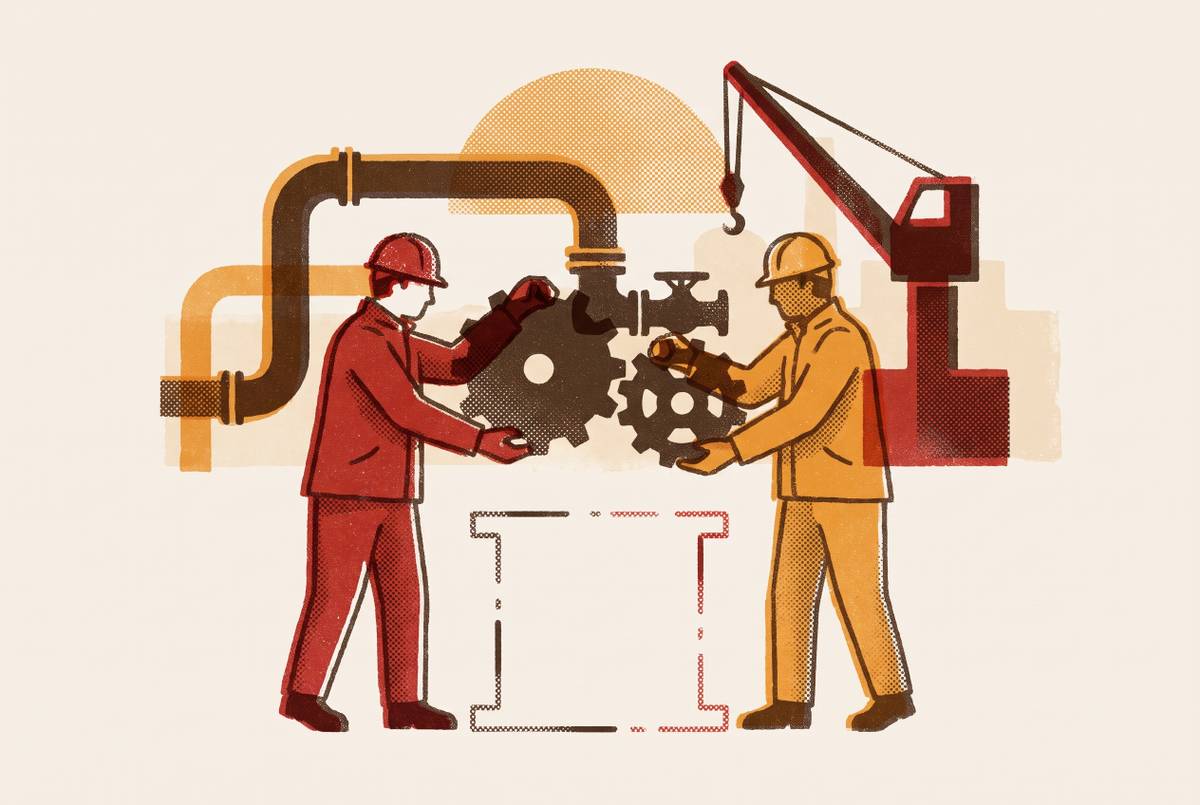
For operations leaders, the right starting point is a specific, painful process rather than a platform commitment or broad transformation roadmap. The first task is to audit execution, tracing where exceptions occur, which handoffs generate overrides, and where approvals exist on paper but function as formalities. This establishes what needs to change before deciding whether AI belongs in the solution. A process audit is an operational discipline.
The audit must also reach the organization of work. The International Labour Organization's 2026 report on AI in manufacturing frames the transition as a challenge for institutions and workers as well as technology. Deloitte's 2026 analysis finds that 84% of companies have not redesigned jobs around AI. Roles, responsibilities, and decisions must be reconsidered around what AI can actually do.
In supply chain and procurement, this requires confirming that materials, equipment, and schedule data are actually present and connected before asking AI to monitor or optimize them. Otherwise, the system risks confirming a merely declared state. The upstream work comes first. Because the Suffolk/MIT model depends on changes across connected domains, it implies that design data and procurement tracking must be clean before downstream scheduling optimization and labor coordination can yield results that can be trusted.
That dependency requires understanding the inputs and handoffs on which the chosen process depends. A process-first approach can audit the work before tool selection and aim to put the first live process into operation within weeks. That timetable is an implementation aim. The determining criteria remain the quality of field evidence, the clarity of ownership, and the integrity of connected inputs.
Durable advantage comes from redesigning work around the organization's operating conditions and capabilities. Operational pain identifies the starting point and helps determine which tool, if any, belongs next. Organizations without a defended technology stack are structurally better positioned to make that decision on the evidence.