The Platform Sales Cycle as a Symptom of Operational Problems Nobody Wants to Own
Buying a platform won't fix operational disputes that the organization hasn't resolved.
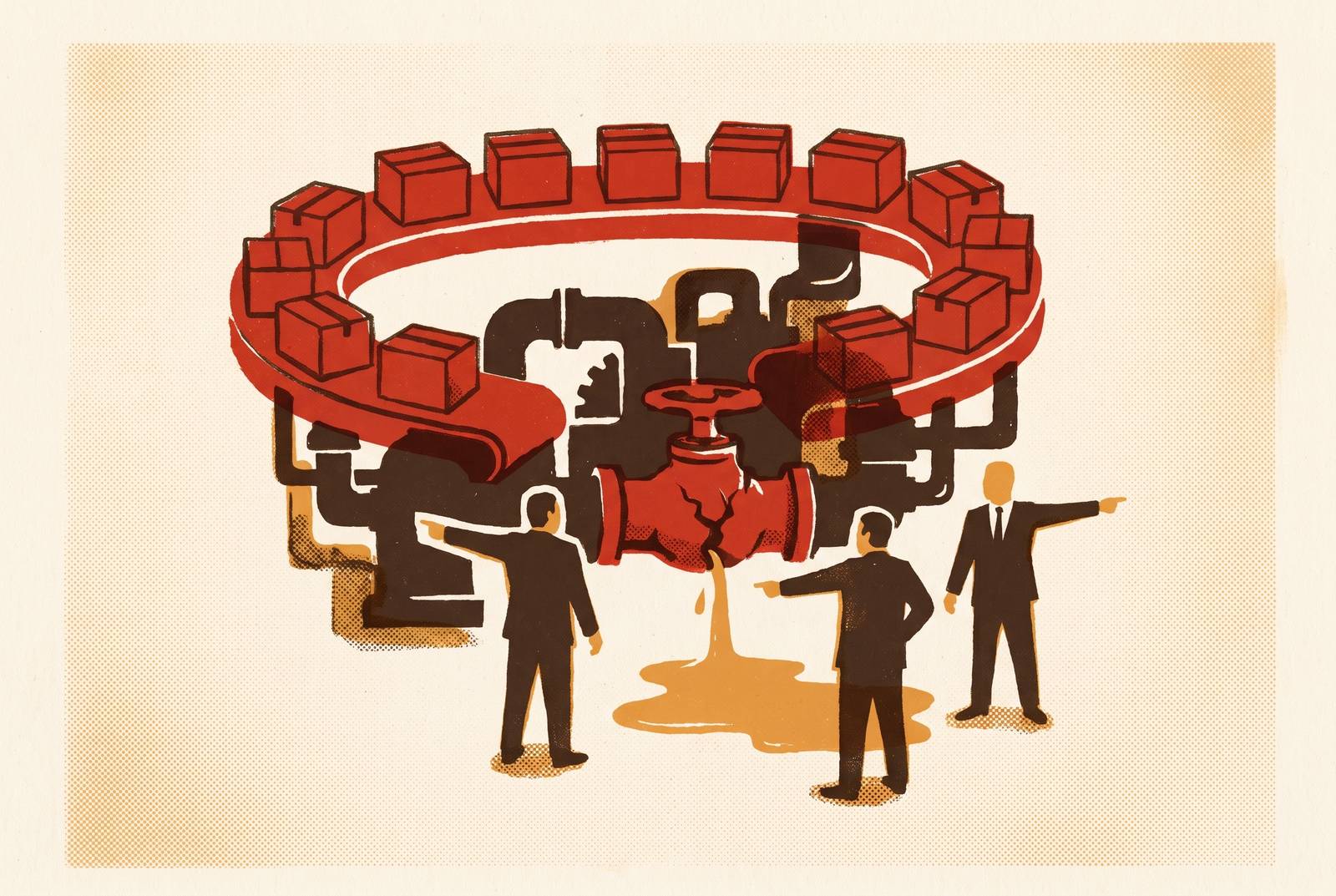
AI operations transformation for asset-heavy industries can start with one broken process, without a platform strategy or a broad digital roadmap. Begin with a process audit, a named owner and a measurable outcome, then apply AI to the work that needs rebuilding. When those decisions remain unresolved, the platform sales cycle becomes a way to defer them while the operation remains broken.
Why the platform sales cycle exists as a symptom, not a cause
The budget meeting ends with applause. A contract has been signed, a vendor selected and a go-live date set. For the people who have spent months defending the expenditure, the feeling of resolution is genuine. The organization has put money and a delivery date against a problem that once seemed to have no limits and no end. Yet the dispute over how the work should run may be exactly where it was before the purchase.
In that situation, the purchase is a deferral. The organization has agreed on what to buy without agreeing on who owns the broken process, what outcome that person must deliver or how the process currently fails. An unresolved dispute now has a contract number. Procurement can mark its decision as complete while operations still has one to make, because a commitment to buy and accountability for the work are different things. The former cannot substitute for the latter.
The sales cycle gives that substitution a durable structure. Requirements-gathering, scoring, procurement, legal review and budget defence each produce visible work, while the process awaiting repair remains contested. Every stage offers an opportunity to name its owner and define its outcome, but none necessarily requires the organization to do so. Assess whether the organization settled the operational decisions that any platform would need, independently of the selected platform’s capability.
What the requirements-gathering phase reveals about process ownership
The first evidence appears when departments describe their requirements. Marketing captures leads, sales works in a different system, operations automates fulfilment and finance reconciles the results manually. Each department can explain what it does and defend the metric it uses. No one owns the whole journey. The document assembled from those accounts records what the departments wish the process were, without establishing a shared account of what it is.
This produces a peculiar combination of precision and ambiguity. Requirements can specify each department’s preferred workaround in detail while leaving the overall definition of success unresolved. The way each department works becomes a formal demand, even when it works that way because the wider process is broken. The detail looks like operational knowledge. In practice, it can preserve the boundaries that prevent anyone from taking responsibility for the outcome across departments.
The vendor then responds to the document as written. That response may be accurate and complete on its own terms, but the organization evaluates it against criteria that have never been tested against field reality. Agreement between the proposal and the requirements establishes consistency between two documents. The missing account remains missing. It concerns where the process breaks, how people compensate and who has the authority to change it.
This is where the declared-plan and field-evidence gap begins. The same gap appears later when senior teams design a transformation programme, test it with willing early adopters and take the pilot’s success as proof that it is ready for full rollout. Requirements-gathering is an earlier version of that move. It makes part of the story official before the organization has faced the conditions in which people must do the work.
Why vendor selection scorecards measure the wrong thing
A scorecard inherits the limits of its requirements. If those requirements say what each department wants before the departments agree on a process, scoring vendors against them leaves that disagreement in place. The evaluation may be disciplined. Its object is still wrong, because it measures conformity to a description that leaves the central operational questions unanswered.
How complete the features are, claims about integration and reference customers all tell the buyer something about what a vendor offers. None establishes whether the deployment will resolve an ownership vacuum that the buyer has not acknowledged. A platform can support a workflow without determining which department has authority over it. Integration can connect systems without settling whose data takes precedence. Those distinctions separate technical capability from the organizational decisions required to use it.
The highest-scoring proposal may consequently be the one that mirrors the requirements most effectively. Its apparent fit includes not only the organization’s legitimate needs but also its omissions and preferred workarounds. The selection process makes a category error when it asks a supplier to demonstrate product capability, then treats the answer as evidence that an internal governance problem has been solved.
Enterprise CRM provides a useful control case. Organizational politics, custom code debt and friction over governance between departments build on each other as deployments grow, so the challenge differs from a smaller rollout with clearer boundaries. More capability does not remove those dependencies. The same fragmentation that shaped the requirements enters implementation through competing definitions, exceptions and decision rights. A scorecard that ignores those conditions cannot distinguish a technically suitable platform from a deployment the organization is ready to operate.
The implementation stall as the ownership vacuum made visible
Deployment ends the protection that abstraction provided. Someone must decide who approves an output, who is accountable when an agent or workflow makes an error and which department’s data takes precedence when systems disagree. Requirements-gathering could make room for answers that clashed by listing them as separate needs. Implementation cannot do that indefinitely.
Those decisions often arrive as configuration tickets. Their form makes them look like technical work, so they pass to the implementation team. Their substance is governance, however, and that team cannot confer authority on a process owner who has never been named. The ticket remains open because the decision remains unowned. Treating it as a project-management failure mistakes the location of the delay for its cause.
The stall makes the original deferral visible. Procurement is done, the contract is active and the implementation team is there, yet the organization still cannot say how the process should work when departments want different things. More detailed configuration does not answer that question. The purchase was supposed to create forward motion, but deployment has reached the exact dispute that the sales cycle allowed everyone to postpone.
Frontline work exposes a further version of the same gap. A pilot cohort can adopt a platform while contact-centre agents, field engineers or warehouse operatives face different pressures and less training during wider deployment. With those pressures and less training, workers may go around the official process to get the task done. Workarounds then accumulate. The digital process can cover up the analogue one while leaving it in place, so the transformation still stands on paper even as the work stays the same.
AI agents accelerate this problem. Governance gaps leave accountability unresolved, transparency gaps make outputs harder to assess and coordination gaps leave dependencies between tasks unsettled. These technical terms describe weaknesses in how the work runs. A successful demonstration leaves those weaknesses untested in the real process, where the agent must operate in production.
How the same dynamic appears in physical operations, where the cost of deferral is measurable
In asset-heavy operations, an unowned dependency can leave a finished asset unable to operate. Construction makes the distinction especially clear because completion and readiness are not the same event. A project can get its permits and equipment and finish construction on time while still lacking the specialized crews that must test and certify its electrical systems before energization. The asset is built but cannot run. The missing dependency was outside the schedule that defined success.
The energization chain includes permitting, equipment delivery, construction completion, testing, certification and crew availability. Each has its own lead time. A schedule that accounts for only the first three describes part of the delivery process and leaves the remaining dependencies for operation unaccounted for. Engineering, capital planning, quality governance, schedule integration and commissioning planning can each own a part while no department owns the whole chain.
Oracle’s Project Jupiter provides a concrete example of a dependency that must remain visible in the delivery account. Its planned fuel-cell microgrid was waiting for a state permit in September 2026. That status alone does not establish an ownership failure, and it should not be treated as an indictment of the project. It establishes something narrower and operationally important. Infrastructure that has been announced and infrastructure that is ready to run are at different points in a dependency chain.
London commercial developments show the consequence at building level. Multiple developments have reached full construction completion, including internal system commissioning and fit-out, while permanent grid energization timelines extend years beyond original handover targets. The gap between a completed building and revenue-generating occupancy spans responsibilities that no single internal department fully owns. Measuring only the completed portion conceals the dependency that controls the commercial outcome.
Manufacturing offers the positive contrast. Deloitte’s AI in Manufacturing 2026 survey finds that adoption is strongest in quality, production and supply chain, where there are rich process signals, outcomes can be measured and it is clear who owns the work. Those characteristics link the technology to work that has an accountable owner, rather than to a broad aspiration whose delivery belongs to everyone and no one.
How do you fix one operations process with AI without buying a whole platform?
Organizations that break the pattern agree on who owns the process before they talk to a vendor. They name the person accountable for the process and establish an honest account of its failures, rather than asking a purchase to create that agreement later. The distinction is structural. A requirements document written after those decisions describes work the organization has agreed to change, while one written before them can formalize the disagreement.
Deloitte’s survey finds that only roughly one in five use cases has been scaled consistently across sites or enterprise-wide. The scaled cases share clear ownership, measurable KPIs and high data density. Those conditions give an AI initiative more than a promising demonstration. They connect the system’s output to an operating result and to someone responsible for achieving it. In this pattern, governance constrains scaling.
A European mechanical contractor in data center construction illustrates the difference. The firm adopted AI-augmented BIM and drone-based progress monitoring and moved from a majority of major projects delivered on time to a strong majority. The relevant change was not monitoring in isolation. Monitoring became part of the workflow that owned delivery accountability, so field evidence was connected to the process responsible for the result.
The practical implication is to start with a specific, painful process. A process audit comes before the platform strategy because it establishes where the organization’s description diverges from how the work actually runs. For a plant without a digital roadmap, that provides a bounded starting point for AI operational improvement. The criteria are a named owner, a measurable outcome, sufficient process signals and an explicit account of current failure. A broad enterprise software commitment is not a prerequisite for establishing them.
This also distinguishes the roles of a software vendor and an operational transformation partner. A vendor sells against requirements the organization has already written, while a process-audit-first partner begins with the gap between that document and field reality. The purpose is to rebuild the workflow around AI’s capability. The first AI-first process rebuilt on that basis can shorten the go-live timeline from quarters to weeks. That possibility is bounded to the first rebuilt process within an entire enterprise transformation.
A long timeline is therefore not, by itself, evidence of rigor. When the same ownership questions remain unresolved, it can mean that the sales cycle has resumed under an implementation label. The decisive difference appears before the purchase. Organizations that escape the pattern answer who owns the work, what must improve and where it currently fails before a contract turns those unanswered questions into a delivery obligation.