What Full Process Redesign Actually Produces vs. RPA Automation
Redesigning workflows beats automating tasks because they solve different problems.

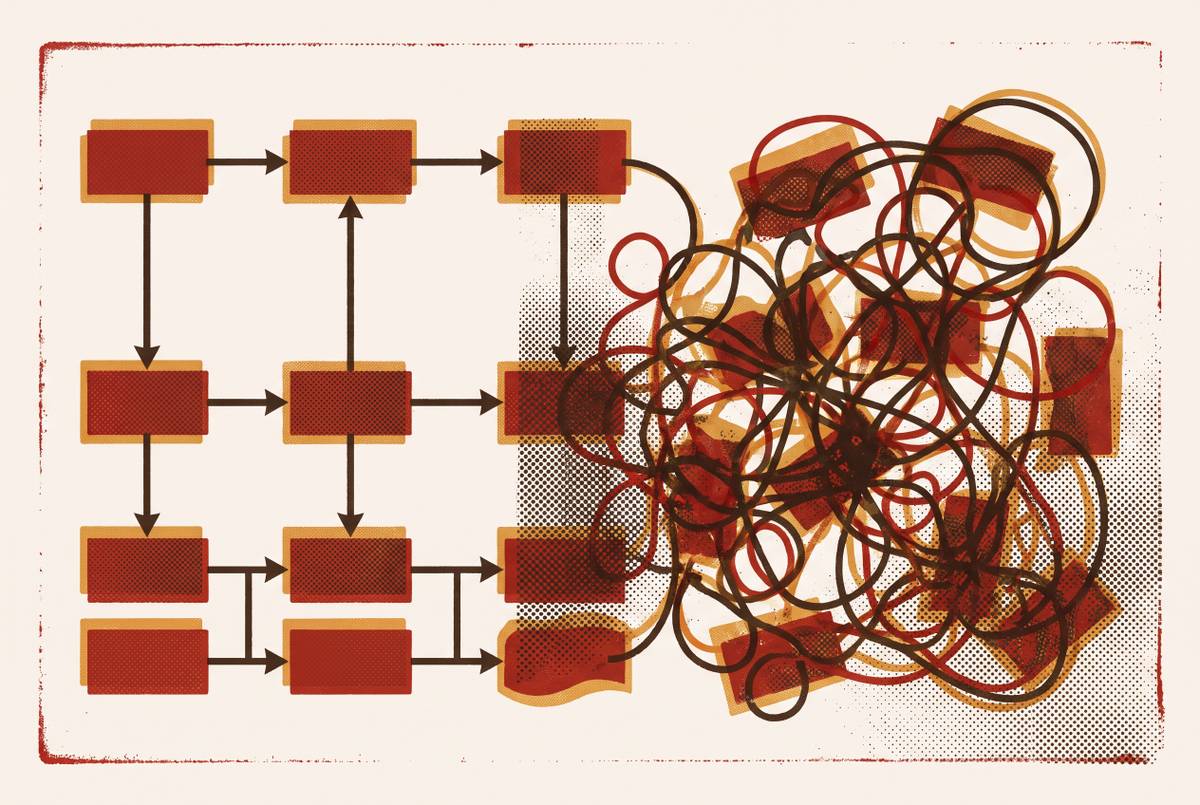
RPA and full process redesign get discussed as though they sit on the same scale, with redesign as the more ambitious version of what automation already does. They don't. RPA automates a task. Process redesign rebuilds a workflow. They are different objects, so you get different categories of output, and that's the distinction this piece maps.
RPA and process redesign produce different things
RPA's object is the task. A bot logs into an application, copies a value from one field to another, completes a form, moves a file from one folder to the next. It mimics a single human action at a specific step in a sequence, and it does that action reliably once it has been scripted correctly. Process redesign's object is the full sequence of steps, the decision rules that govern how exceptions get handled, the handoffs between departments or systems, and the feedback loops that shape whether the process gets better or worse over time. A task is a unit of execution. A workflow is a system of coordination. If one task gets faster, that says nothing about whether the coordination around it improves, and in many cases it says nothing about whether the outcome the workflow was built to produce improves either.
Smartbridge's 2026 hyperautomation analysis draws this line with precision. Traditional RPA handles individual tasks through rule-based decision-making and hands exceptions back to a human. If the objects of intervention are different, the outputs have to be different too. That is the frame the rest of this argument builds on.
RPA's capabilities and limits
RPA earns its place in enterprise operations honestly. It performs well on repetitive, high-volume, rule-governed tasks where the data is structured and the system interfaces stay stable: data entry, form completion, report scheduling, invoice routing. These are tasks where a bot runs faster than a human and doesn't make transcription errors, which is a genuine and measurable gain for any organization moving large volumes of structured work through a fixed set of steps.
The ceiling on that gain comes from the architecture itself. Smartbridge is specific about the mechanism: RPA bots follow rigid scripts, and they break when a screen layout changes or an exception appears that nobody scripted for. Research published in Information Systems and e-Business Management identifies a complexity that RPA vendors tend to understate: successful implementation demands deep technical knowledge of both the RPA tools themselves and the existing digital infrastructure they sit inside, requires organizational and process-related capabilities most teams don't have on day one, and depends on governance strategies that are clear before deployment, not improvised after. RPA is not the lightweight, drop-in solution it gets marketed as.
The maintenance burden compounds this ceiling. Scalarly's 2026 automation strategy guide notes that automated processes break when the systems underneath them change, a UI update, a new field added to a form, a modified API endpoint, and without proactive monitoring, those breakages fail silently. The bot stops working, nobody notices, and humans quietly end up doing the work it was supposed to do. That silent failure sets up the deeper problem: what happens when a working bot gets dropped into a workflow that was never designed to receive it.
Automating a task inside a broken workflow makes the workflow worse
When a task gets automated inside a workflow that was never redesigned, the workflow's structural flaws don't disappear. They get accelerated, and they become harder to see: the parts of the process that already worked now move faster, while everything broken underneath them stays exactly as broken as before.
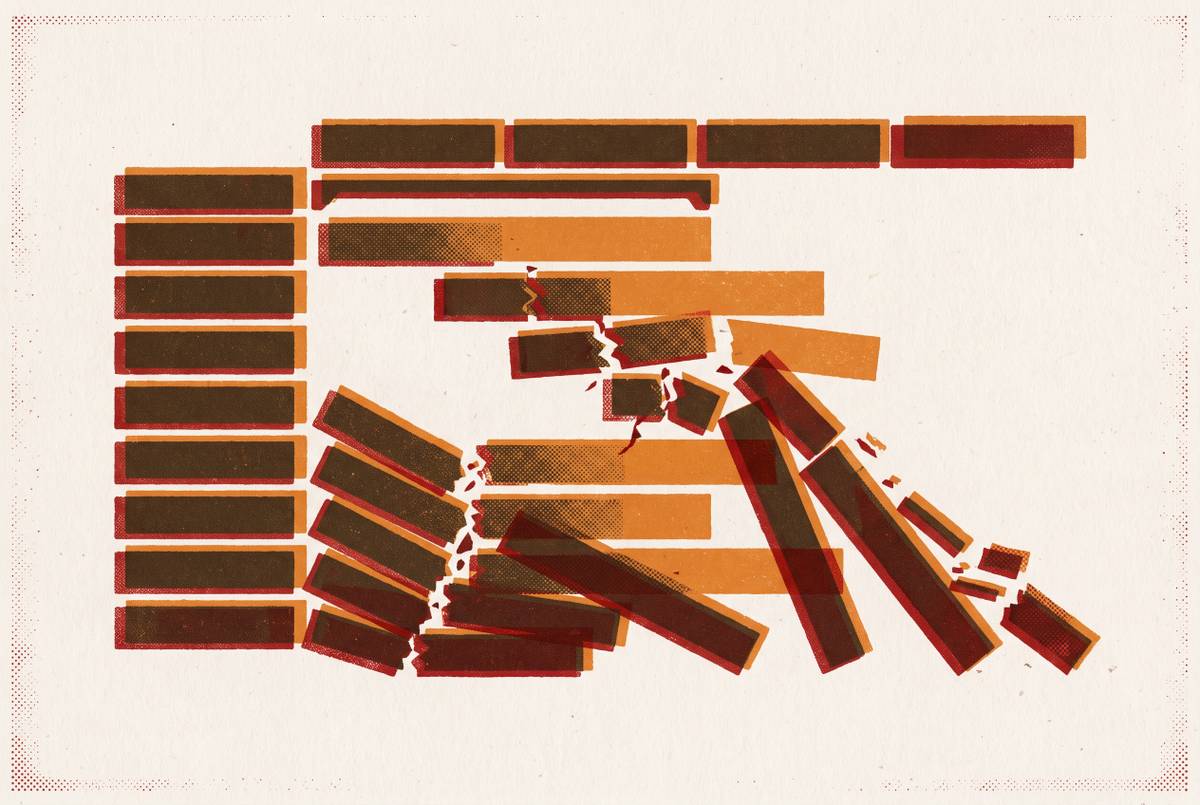
The mechanism is straightforward: faster execution at one step increases throughput at that step, and the constraint in the workflow simply relocates downstream. It does not vanish. Scalarly's 2026 guide names this pattern directly: a process broken at a fundamental level remains broken after automation, just faster. IT teams that deploy bots without involving the people who own the process end up encoding the workarounds and exceptions that redesign should have eliminated, baking dysfunction into the automated system.
Encoding dysfunction into the automated system produces three recurring failure modes. The third is optimizing the wrong metric: a customer service agent can raise ticket closure rates by ending interactions too quickly, which increases repeat contacts and leaves the underlying problem unresolved. Throughput climbs while the outcome the process exists to serve degrades.
Smartbridge states the strategic implication: organizations that treat hyperautomation as RPA plus AI miss the point, because the technology stack matters less than how it gets orchestrated, and orchestration requires redesigning the workflow rather than layering more tools onto the one that already exists. Terminal Use, an AI-first operations rebuilder, operationalizes this distinction in practice. Its process audits map the entire workflow, not isolated tasks, before any AI agent gets deployed end to end, so the workflow itself is treated as the thing being designed, not as a fixed container that automation gets poured into. That methodology reflects the core insight here directly: the object chosen for optimization determines the category of output that's possible.
The output difference in practice: the Wayfair case
Wayfair's deployment shows what redesign-first produces that task automation structurally cannot: a self-improving operational system in which the workflow itself, its definitions, confidence thresholds, handoffs, exception routing, and feedback loops, is the thing that was actually designed.
The scale of the problem makes clear this was a workflow failure, not a task failure. Wayfair's catalog runs to more than 40 million items, and inconsistent product attributes across that catalog damage search quality, recommendation accuracy, merchandising decisions, and the returns process all at once. Working with OpenAI, Wayfair embedded models directly into the catalog and supplier-support workflow, correcting millions of product tags and automating tens of thousands of supplier-support tickets each month.
What makes this redesign rather than automation is the set of decisions that had to be made to get there. Every one of those is a design decision, not an inherited constraint the system had to work around.
Compare that with what task-layer automation would have produced in the same catalog. The process gets designed around the technology. The technology does not get dropped into the process.
How this plays out across construction, logistics, and manufacturing
In construction, logistics, and manufacturing, the gap between task-layer output and workflow-layer output is a question of operational risk, because the processes where automation looks most tempting are the same ones where workflow failures cascade into costly or dangerous consequences.
In construction, you don't get the highest return by automating a status report. Task automation handles one of those threads in isolation. In procurement, you get reductions in material cost and in the delays tied to material availability when you redesign the supply chain workflow, not when you automate purchase orders one at a time.
In logistics, the binding constraints are integration debt, workflow governance, chain of custody, eligibility rules, release gates, decision logs, and data ownership across systems. If a logistics workflow has not resolved those structural issues, automating a task inside it just adds speed to a process that still cannot pass work between systems reliably or enforce accountability when something goes wrong. Both are workflow redesigns, not task automations layered onto an unchanged operation.
In manufacturing, AI adoption is already advanced, with robotics, autonomous vehicles, and drones reshaping shop floors and distribution centers. Manufacturing shows that workflow redesign is a precondition for the technology to function.
Governance for failure modes in redesign-scale deployments
Full process redesign with AI agents introduces failure modes, cascading errors, irreversible autonomous actions, verification gaps, that differ categorically from anything an RPA deployment produces, and governing them requires rules built for the workflow level.
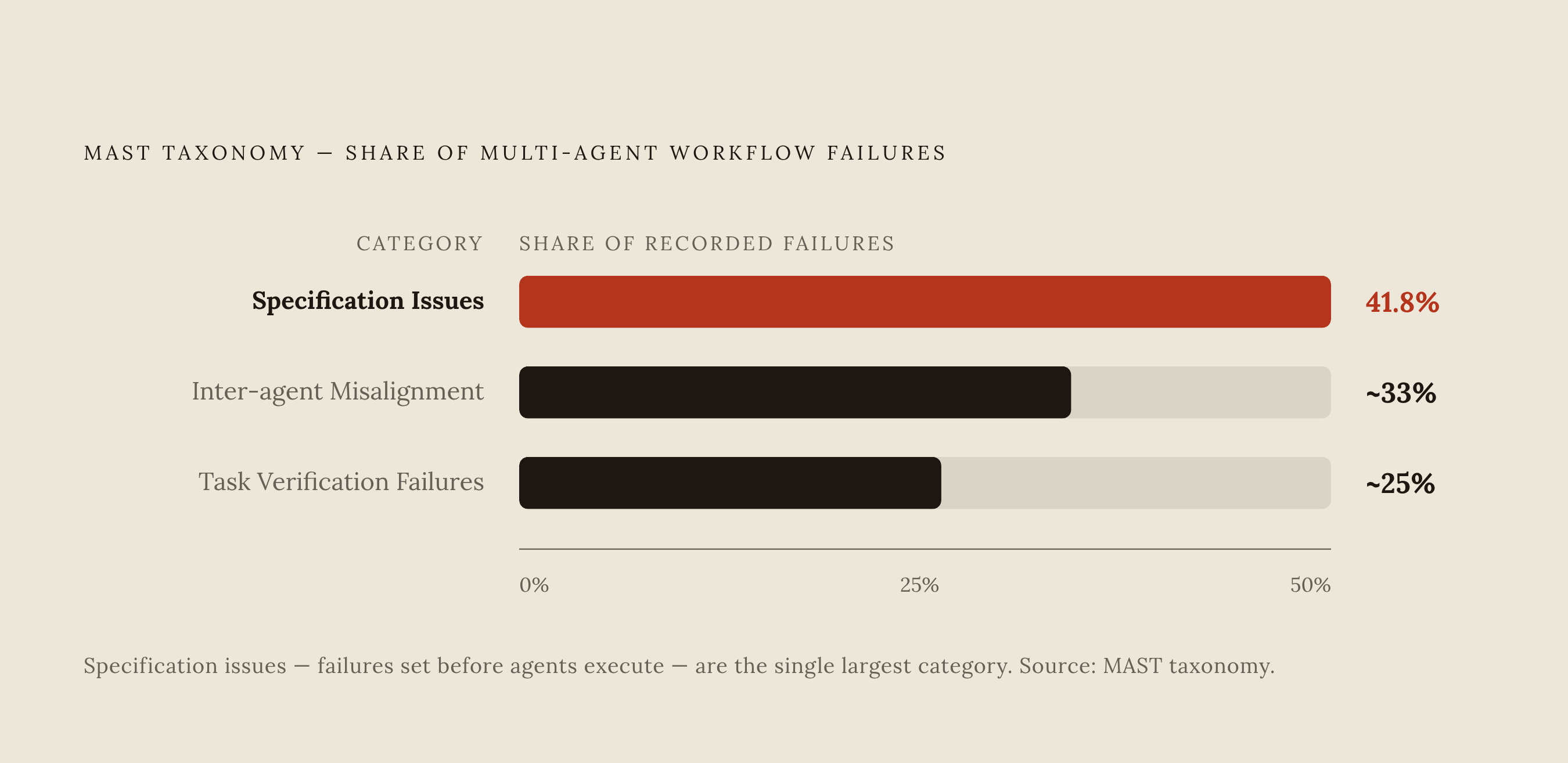
RPA failure is local and visible. Agentic workflow failure behaves differently: it's systemic, and it can be invisible for a long time, because no agent in the system necessarily checks that the workflow's output still serves the original goal before the result gets delivered. The MAST taxonomy identifies three categories of multi-agent failure: specification issues, inter-agent misalignment, and task verification, with specification issues the most common, accounting for roughly 41.8% of failures recorded.
Cascading failure is a distinct threat at redesign scale. An autonomous action in one part of the workflow can trigger downstream actions before anyone detects that the first action was wrong. In construction, an agent that ships an unapproved RFI response creates real liability. The higher the potential impact of an action, the more you need approval gates and rollback mechanisms built in before the system goes live.
Scalarly's 2026 guide makes the monitoring stakes concrete: automated processes fail silently when the systems underneath them change. At the workflow level, that silent failure has more distance to travel before anyone catches it, so you need to plan monitoring service-level agreements and mean-time-to-repair targets as operational commitments, not as an afterthought you hand to IT once the system is already running. Organizations that approach redesign with RPA-era governance, bot-level monitoring, task-level exception handling, will recreate the same fragility they were trying to escape, just at a scale where the consequences are larger.
Identifying whether a process needs redesign or can be automated as-is
Whether a given process calls for task automation or full redesign is answerable before any technology gets chosen, provided the process is examined at the workflow level first, a step most automation programs skip.
Most often, people automate whatever generates the most internal complaints instead of weighing which process delivers the most value. Scalarly's 2026 framework evaluates automation candidates across four dimensions: volume, standardization, strategic value, and technical feasibility, and strategic value is the dimension most often left out of the evaluation. Four diagnostic questions separate a task-automation candidate from a redesign candidate. If not, the process needs approval gates and clear human authority at decision points, a workflow design question.
Research on RPA implementation conditions finds that successful adoption requires deep technical knowledge of both the automation tools and the digital infrastructure they'll run inside. The process must be mapped first: how it actually runs today, where value is produced, and where it breaks, before any decision gets made about what to automate and what to rebuild. If you're a buyer asking which workflows to examine before deploying AI, this is the process audit to look for. Terminal Use builds that diagnostic step into every engagement: before any technology decision, clients show how a process runs today and where it hurts, and the audit determines what gets rebuilt first. If you skip that audit and move straight to tool selection, you end up automating a broken process, which is the exact failure mode this entire argument has been tracing.
What redesigning organizations produce and require of leadership
Full process redesign produces outputs that are different in kind from efficiency gains: new operational capabilities, workflows that improve themselves over time, and the ability to act on information the previous process never even captured. To reach those outputs, you need an organizational commitment that most enterprises have not yet made.
Redesign gives you end-to-end workflow optimization rather than speed at a single step, so the constraint moves with the actual work instead of sitting permanently at whatever task got automated first. And it produces decision logs and audit trails covering the entire workflow, which is what chain of custody, regulatory compliance, and operational accountability actually require in construction, logistics, and manufacturing.
Deloitte's 2026 enterprise AI research shows how wide the organizational gap still is: only roughly a third of surveyed organizations are genuinely reimagining core processes, while the majority are getting task-layer outputs and calling the result transformation. Closing that gap requires treating the workflow itself, not the tool, as the object of design. You have to define where human authority remains before deployment, not after an incident forces the question. It requires building monitoring, maintenance, and governance into the business case from the outset rather than treating them as problems to solve after launch. Scalarly's 2026 guide on operating model design makes the maintenance point concrete: automations degrade over time when no resources get allocated for upkeep, and including maintenance estimates in every business case is what separates ROI projections that hold from ones that erode within a year.
The distinction matters operationally because it shapes the starting question for any leadership team: should the intervention optimize what already exists, or rebuild what's broken? Firms that rebuild department workflows from scratch, rather than automating the current state as found, sidestep the failure modes mapped above, because the structural flaws get eliminated before agents get deployed, not after. Full process redesign produces a workflow that can adapt, learn, and improve, because the feedback loops and decision logic get designed in from the start rather than bolted onto a legacy structure after the fact. AI agents belong inside the workflow during redesign itself, running real decisions end to end, rather than being grafted onto a process that was never built to work that way. Terminal Use's own position on timeline offers a useful calibration here: the first AI-first process should be live in weeks, not quarters, and a long timeline signals that the approach is wrong. If you start with one specific, painful process and redesign it completely, you get a live result fast enough to validate the model before you scale it further. Task automation produces efficiency gains on paper. Process redesign produces a different kind of operation. Which one an organization actually needs is the question its leadership has to answer before choosing either.