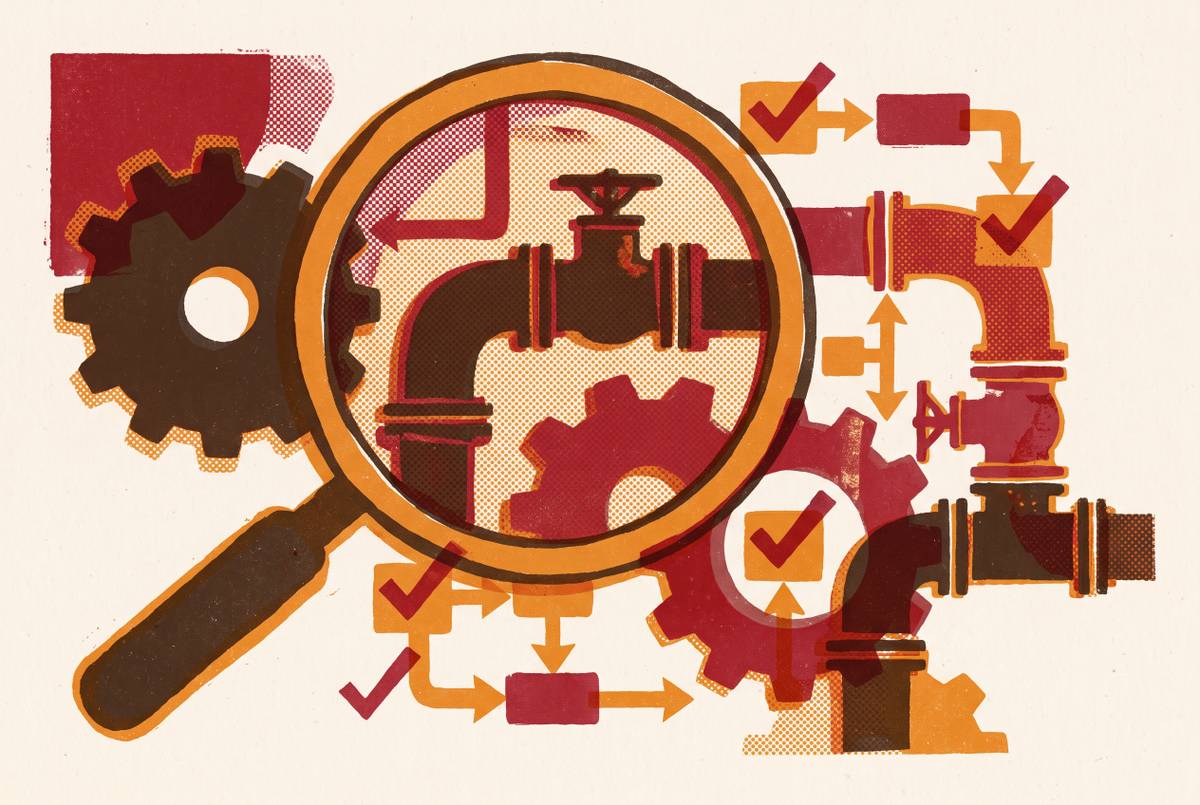
Total Cost of Ownership of Point-Solution AI Portfolios in Operations
Adding AI tools multiplies integration, governance, and support costs across operations.
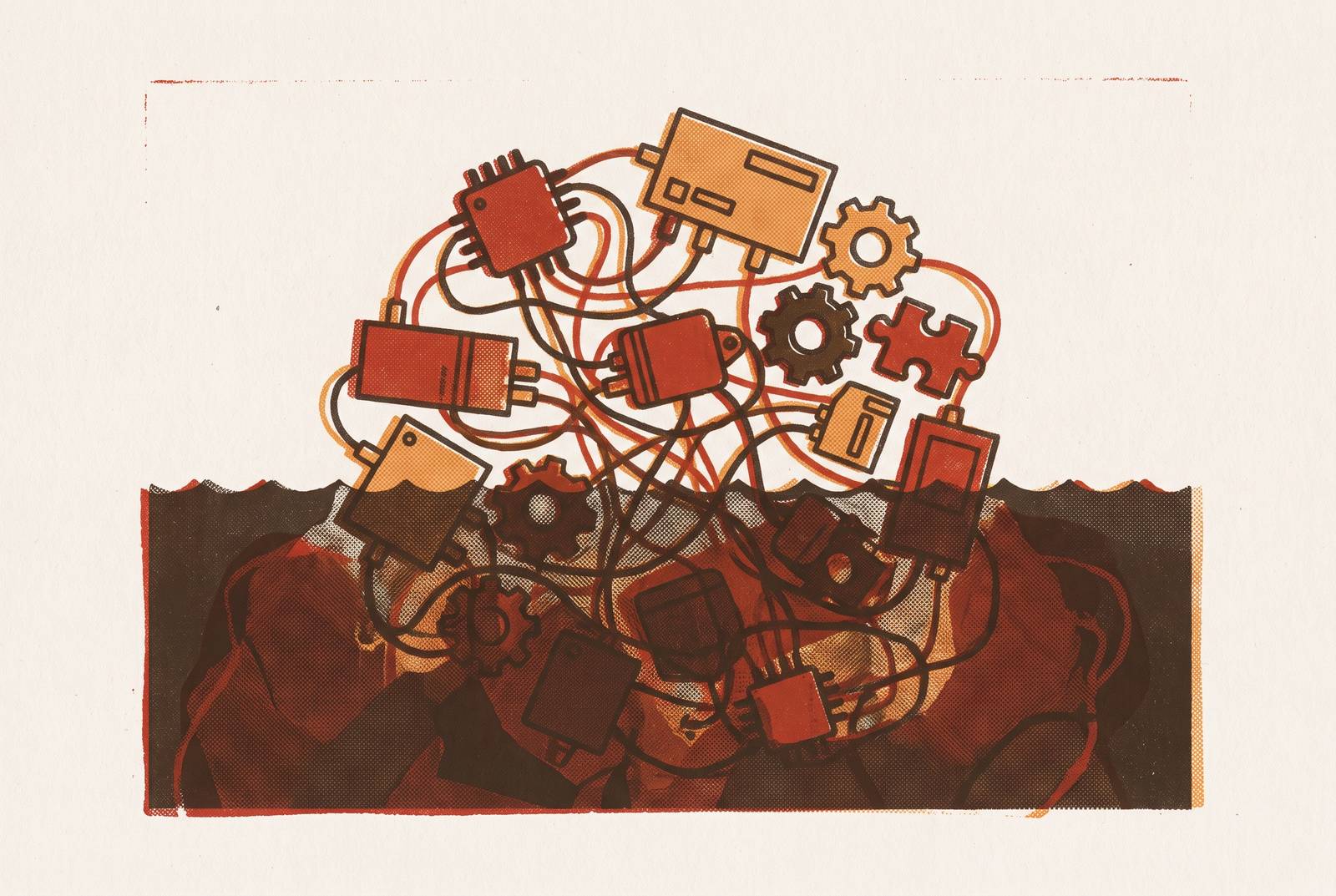
Total cost of ownership for point-solution AI portfolios in operations is a system-level question. Each added tool can compound the cost of connecting data, governing decisions, supporting users, and paying for overlapping capabilities. In asset-heavy operations, an honest investment decision therefore starts with the processes the portfolio must serve.
Why AI tool portfolios in operations don't add costs—they multiply them
Operations leaders often set the AI budget by adding up the license fees for the tools they plan to buy. That calculation assumes each purchase is a separate expense whose cost can be evaluated in isolation. In practice, a new tool also creates obligations across the systems and workflows already in place. Its data must reach other tools, its actions must fit operational controls, and its users must work within processes that cross departmental boundaries. The unit being purchased is a tool, but the unit being changed is the operating system around it.
This interdependence makes portfolio growth different from a simple increase in software spending. Each addition carries its own running costs while creating new connections and potentially duplicating capabilities elsewhere. That work continues after deployment and changes as the connected systems, their use, and workflows change. Calling them hidden costs understates the problem because they are structurally excluded from the per-tool budget. The resulting underestimate grows with the portfolio because the budget counts purchases while the operation absorbs their dependencies.
How consumption-based pricing turns a manageable license budget into an unpredictable system cost
The first mismatch appears in the pricing model itself. Most AI tools charge per token, per API call, or per agent task, so expenditure depends on the work performed. Cohere describes how a single interaction can trigger model calls, retrieval steps, tool invocations, and retries. A portfolio has several ways for costs to rise or fall, each based on how a tool is used. A manageable set of license commitments can become a much less predictable operating expense.
A tool can also become more useful and change what it costs without any visible change to the product. Cohere explains that larger context windows, retrieval intended to reduce hallucinations, and agent loops can substantially alter the cost profile. In operations, an agent may read procurement data, act against ERP systems, and create audit-trail outputs all in the same workflow. Each step adds consumption, and the need for permissions, error recovery, and logging adds more work to keep it running. Expanding the agent’s responsibility changes more than its token bill.
Across a portfolio, these changes affect tools that are billed and used in different ways. Errors in cost forecasts can add up rather than cancel each other out, especially as several tools play a bigger part in operations. The relevant comparison is therefore the cost of running each capability at the required level of use.
Integration debt as a compounding liability, not a one-time setup cost
Consumption is only the first recurring obligation because useful AI also depends on connected operational data. A new tool must connect to existing systems and to every other tool with which it needs to exchange information. Integration debt consequently grows with the required connections. Legacy systems and poorly documented APIs make those connections harder to build. Authentication, permissions, data mapping, error handling, testing, and maintenance remain necessary even when the AI functionality itself is straightforward.
The liability continues after the initial connection works. An API change can require repairs across the integrations that depend on it, turning a change in one system into work elsewhere in the portfolio. This is why a setup allowance does not capture the cost of keeping a connected operation functional. As the portfolio expands, the work cannot be understood as a series of completed installations.
The operational consequence is clearest when procurement data does not reach scheduling or field progress does not reach forecasting tools. Teams must manually assemble the cross-functional view that the tools were meant to support. In data center construction and large-scale manufacturing ramp-ups, schedule deviations require an immediate response across functions. A gap in data exchange is therefore not just an administrative inefficiency but a source of operational risk.
Governance and compliance overhead that standard IT review processes weren't designed to handle
That operational risk extends from whether data moves to whether an AI system’s actions can be explained. Every tool needs a security review, vendor audit, data handling assessment, and monitoring for as long as it is in use. These obligations remain active for as long as the tool does, rather than disappearing once the vendor becomes familiar. A growing portfolio therefore increases the standing workload of IT and compliance teams. Approval at procurement is only the beginning of that responsibility.
AI agents make the distinction especially important because every action can become a compliance event. Standard vendor management does not, by itself, establish an auditable account of what an agent did within an operational process. Where audit trails are incomplete, the organization may be unable to explain an action after the fact. Adding more tools that are each governed on their own creates more places where such gaps can occur. The organization must maintain control over more operational activity as it approves more vendors.
In construction, that activity may affect project documentation, while manufacturing needs compliance records it can trust and logistics relies on audit trails that meet carrier requirements. An AI tool that cannot produce an auditable record can put documentation at risk or contribute to contract disputes. Governance expenditure is therefore part of the cost of keeping the operation accountable.
Duplicate capability spend: how three teams buying similar tools pay three times for one capability
The same lack of cross-department visibility that complicates governance also conceals duplicate spending. Operations may buy a tool for scheduling optimization, procurement may buy one for supplier risk, and field teams may buy one for document extraction. Each purchase can meet a real need for a team while doing document processing, data retrieval, or prediction that another team has already paid for. The department sees a distinct application, but the organization pays repeatedly for parts of the same functional capability.
Each copy also needs its own governance, integration work, and support. Paying three times for tools that do the same thing can mean taking on three separate sets of work to keep them running. Portfolio rationalization has a direct financial case wherever that repetition does not deliver a necessary distinction in capability. This is an architectural question.
The waste is particularly damaging when the departments involved most need to share data. Scheduling, procurement, and commissioning can operate separate tools with overlapping data needs but no shared data layer. In that arrangement, repeated spending can accompany the fragmentation that prevents individually useful tools from supporting a common operational view.
Why the workforce and change management costs attached to each tool are almost never budgeted
Fragmented workflows also impose costs on the people expected to make the tools useful. Each deployment needs change management, workflow redesign, and training that continues over time, but procurement budgets rarely cover that work. These demands do not remain neatly attached to the team buying the tool. When a new application changes a process, adjacent teams and tools may have to adapt as well. The human cost grows through workflow dependencies just as the technical cost grows through data connections.
This burden is especially severe when the process was not standardized before deployment. The organization must then define the process under production conditions while also managing the tool’s outputs. Automation has not removed the underlying ambiguity but has added another system that depends on resolving it. In operations, where scheduling, procurement, and execution are interdependent, that repair can reach beyond the original deployment team. The cost belongs to the implementation even if it never appears on the vendor’s invoice.
A collection of tools that automates tasks without redesigning the surrounding workflow consequently delivers only a fraction of the value promised by the tools individually. The cost of having enough people to do this work is part of running the portfolio and goes beyond a short-term training budget.
What a complete TCO model for a point-solution portfolio actually looks like
A complete model brings these obligations together at the portfolio level. It accounts for five compounding categories, namely consumption-based pricing volatility, integration liability, governance overhead, duplicate capability spend, and workforce change cost. Each category represents continuing work or exposure rather than a one-time addition to the purchase price. The model must therefore reflect both the tools in use and the dependencies between them. Otherwise, it reproduces the licensing budget’s central error in a more detailed spreadsheet.
Time also changes the composition of expenditure. Implementation and training concentrate costs early, while optimization and scaling become more important after deployment. In a portfolio, these stages overlap because every new tool starts its own implementation cycle. A tool added in year two brings new deployment costs while earlier tools still need optimization. Costs in the first year give a poor picture of what the portfolio will cost in the long run.
Cohere frames the infrastructure choice around which AI capabilities an organization should own and which it should rent. That distinction only becomes useful when evaluated against the level of use operations actually requires. Process readiness provides the other essential input because unreliable data and unstandardized workflows create costs that a product comparison cannot establish. A credible model ties expenditure to the process being changed, the connections required, and the continuing work needed to sustain it.
The objection worth taking seriously: consolidation has its own risks
A full accounting of portfolio costs does not make complete consolidation the automatic answer. Replacing many tools with a single platform transfers exposure from sprawl to dependency. Every integration built around that platform can increase the cost of switching later. If the vendor changes pricing, its roadmap, or model quality, the organization may find that reversing the decision has become difficult.
Even after finding tools that do the same things, the organization still needs to decide what to own. Cohere warns that renting everything can eventually create unsustainable costs or erode control, but that does not establish a case for owning everything. Consolidation also leaves open the risk that an AI investment will fall short of its promised business value. A shared platform still needs data it can use, standardized processes, and deployment that works. Lower fragmentation is a cost advantage only within an operation capable of using the resulting capability.
Deliberate portfolio architecture offers a stronger approach. A primary platform, a small number of justified specialist tools, and uniform governance can distinguish necessary specialization from avoidable duplication. That structure still requires the same process audit and standardization work as any other deployment. Each architectural choice must earn its continuing obligations.
Where to start: the process audit as the prerequisite for any honest AI investment decision
A process audit should precede any tool procurement conversation. Its purpose is to establish which processes are standardized, which data is reliable, and which integration obligations a new tool would create. Enterprise information may be spread across databases, PDFs, tickets, cloud drives, CRM systems, spreadsheets, and legacy applications. Cleaning, normalizing, and continuously synchronizing that information is part of the cost of making AI usable. The audit exposes this dependency before a license price becomes the anchor for the investment decision.
In construction, logistics, and manufacturing, the audit should begin with painful processes that cross functions. These include places where schedule deviations go undetected, procurement data fails to reach field teams, or commissioning readiness is assessed manually against information that is days old. Improving these processes can bring great value because so much depends on teams working together. They are also vulnerable to a point-solution portfolio that fragments the data needed to improve them. If the process cannot be clearly described and documented, an agent cannot execute it reliably.
The audit then determines which processes are ready for automation, which need redesign, and where specialist capability is genuinely required. It also establishes where a shared platform can serve the operational need without repeating the same costs across departments. Procurement can then be based on process economics.